

“Protect Our Past” Partnership Gives Law Enforcement New Tools to Protect Utah’s Archaeological Heritage
Written by Kathryn Peterson, Utah Department of Cultural & Community Engagement
Across Utah, archaeological sites preserve thousands of years of human history, but many of these irreplaceable resources face ongoing threats from vandalism, looting, and unintentional damage.
A single act of vandalism, an artifact removed from its original location, or accidental damage to a cultural site can permanently erase pieces of Utah’s shared history.
To help protect these irreplaceable resources, the Utah State Historic Preservation Office (SHPO) and the Utah Department of Natural Resources Division of Law Enforcement (DNRLE) have spent the last two years building a partnership focused on education, training, and prevention. Through Utah’s Protect Our Past initiative, more than 60 law enforcement officers have received specialized training on cultural resource laws, with plans to continue offering annual training in the future.
For Chase Pili, Captain with the Utah Division of Law Enforcement, the partnership builds on the work officers are already doing across the state.
“Our officers are already patrolling public lands, interacting with visitors, and responding to incidents,” Pili said. “It made perfect sense to provide additional training so they could recognize archaeological resources, understand the laws protecting them, and know who to contact if something happened.”
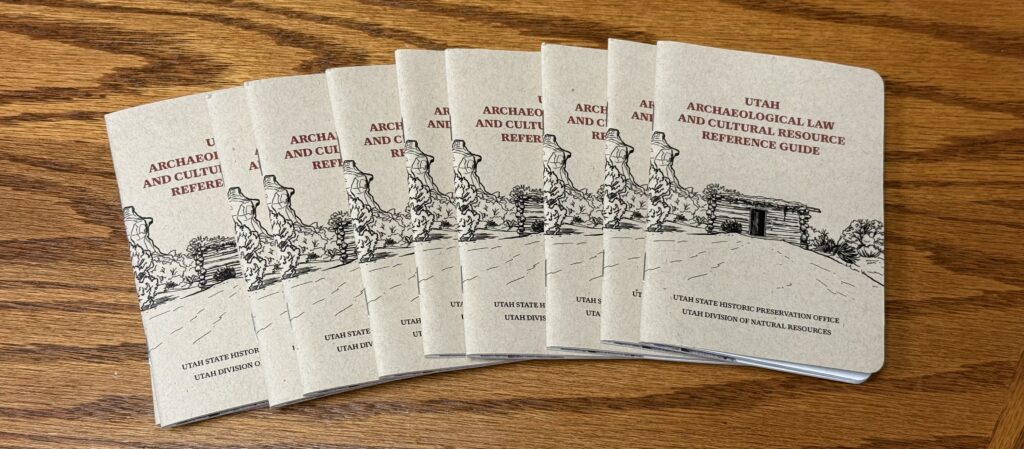
As part of the initiative, SHPO developed a pocket guide for officers outlining state and federal cultural resource laws, common types of archaeological resources, and information to help officers respond when issues arise. The guide provides a quick reference for identifying protected resources in the field, including artifacts and features.
Key statutes referenced in the guide include Utah Code 76-6-902, which addresses the alteration, removal, injury, or destruction of antiquities, as well as additional protections related to state lands, including Utah Code 53C-2-301, Utah Code 65A-3-1, and Utah Code 76-6-107.
Officers also participate in hands-on training alongside archaeologists, cultural resource specialists, and forensic anthropologists at locations such as Fremont Indian State Park.
That hands-on experience helps officers understand the significance of the places they are working to protect.
“When officers actually see pottery, rock imagery, and archaeological features in person, those sites become much more than pictures in a training manual,” Pili said. “They begin to understand how rare these resources are and why they’re worth protecting.”
The collaboration between archaeologists and law enforcement brings together two areas of expertise. Archaeologists understand the historical and cultural significance of sites, while officers understand investigations, evidence collection, and criminal statutes.
“Before, an officer might encounter something they weren’t familiar with,” he said. “Now they know what they’re looking at, they understand the applicable state laws, and they know who to call.”
That confidence is already making a difference. Officers have assisted with investigations involving vandalism at Fremont Indian State Park and have worked alongside federal partners on cases involving cultural resources. Knowing when to involve archaeologists early in an investigation helps preserve evidence and strengthens cases against those responsible for damaging protected sites.

That training is already proving valuable in the field. Officers have assisted with vandalism investigations at Fremont Indian State Park and supported federal partners during investigations involving cultural resources. Having officers recognize when archaeologists need to be involved early helps preserve evidence and strengthens investigations.
Some of the most common damage officers encounter includes graffiti, defacing rock imagery sites, and the removal of artifacts from public lands.
While graffiti on Native American rock imagery sites often receives attention, other forms of damage can be just as harmful. People may scratch their names into archaeological sites or remove artifacts without realizing the impact. In some cases, visitors create piles of artifacts at trailheads or visible areas of a site to show what they discovered.
“These behaviors can be really harmful to a site, and some people don’t realize that what they are doing is damaging,” said Chris Merritt, Director of the Utah State Historic Preservation Office. “Education and building a stewardship ethic are key to improving this behavior.”
Responding quickly when damage occurs is also an important part of protecting these resources. A timely response can help investigators identify evidence, determine what happened, and prevent additional damage.
“If we move and respond quickly enough, perhaps there is evidence of who did the activity and we can use that momentum to identify and prosecute folks,” Merritt said. “Some damage can also expose a site to additional risks, such as erosion, or create a situation where more vandalism follows. We want the public to see a concerted and direct effort to respond so they know the state and its partners take this seriously.”
Ultimately, the goal of Protect Our Past goes beyond enforcement, it is about building awareness and encouraging shared responsibility.


“The goal is to grow awareness among all Utahns and tourists on how important archaeological sites are for the health and history of our communities,” Merritt said. “We want people to understand how to visit and explore these places with respect and recognize that we all share in the stewardship of these places.”
For Merritt, these sites represent thousands of years of stories that connect Utah’s past to its future.
“Every person who lived or traveled through what we know today as Utah for 13,000 years of history has played a role in what we enjoy today,” Merritt said. “Every single story and person is important to the past, present, and future, and these places are usually the only way we see those who came before us to give us that better future.”
Looking ahead, success for Protect Our Past will be measured by both a reduction in damage and an increase in public stewardship.
“I think that success is that we see, and can measure, a decrease in acts of vandalism and an increase in awareness and acts of stewardship toward our cultural heritage,” Merritt said. “Only together can we protect the past.”
Before visiting an archaeological or historic site, both Pili and Merritt encourage visitors to take time to learn about the places they are exploring.
“Know before you go,” Pili said. “Most people genuinely want to do the right thing—they simply may not know what’s appropriate.”
Merritt offers a similar reminder: “Enjoy these places, reflect on their stories, and remember that we all share a responsibility to steward these places. We are all in this together.”
Through the Protect Our Past partnership, SHPO and the Utah Division of Law Enforcement are working together to protect Utah’s archaeological resources and preserve the stories they hold for generations to come.
Legal Disclaimer:
EIN Presswire provides this news content "as is" without warranty of any kind. We do not accept any responsibility or liability for the accuracy, content, images, videos, licenses, completeness, legality, or reliability of the information contained in this article. If you have any complaints or copyright issues related to this article, kindly contact the author above.
